The Joyce Beatty Trump lawsuit is a federal court case involving President Donald Trump, the John F. Kennedy Center for the Performing Arts, and Rep. Joyce Beatty, an ex officio member of the Kennedy Center’s Board of Trustees.
Beatty filed the lawsuit in December 2025 after the Kennedy Center’s board voted to add Trump’s name to the institution. Beatty argued that the board did not have the legal authority to rename the Kennedy Center because Congress established the center as a living memorial to President John F. Kennedy.
The case later expanded to include disputes over Beatty’s ability to participate in board meetings and the administration’s plans to close the Kennedy Center for an extended renovation.
In May 2026, U.S. District Judge Christopher R. Cooper ruled in Beatty’s favor. The court ordered Trump’s name removed from the Kennedy Center and blocked the planned shutdown of the institution.
The Trump administration then sought relief from the D.C. Circuit. On July 8, 2026, the appeals court denied the administration’s request for a stay of the district court’s order.
Joyce Beatty Trump Lawsuit: Quick Facts
| Detail | Information |
| Plaintiff | Rep. Joyce Beatty |
| Main defendant | Donald J. Trump |
| Case | Beatty v. Trump |
| Court | U.S. District Court for the District of Columbia |
| Case number | 25-CV-4480 (CRC) |
| Main dispute | Kennedy Center renaming and related board actions |
| Lawsuit filed | December 2025 |
| District judge | Christopher R. Cooper |
| Major ruling | May 2026 |
| District court result | Beatty won key claims |
| Appeal | U.S. Court of Appeals for the D.C. Circuit |
| Latest major appellate development | Stay denied July 8, 2026 |
What Is the Joyce Beatty Trump Lawsuit About?
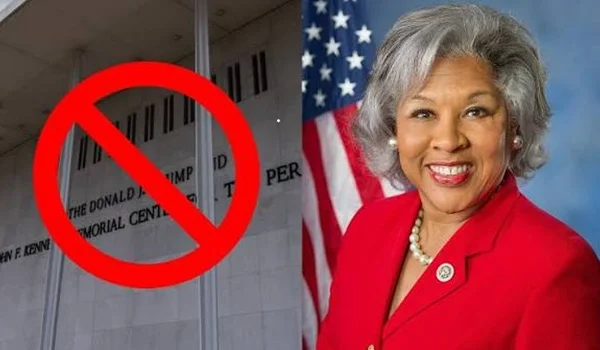
The lawsuit began with a dispute over the name of the Kennedy Center.
The Kennedy Center’s board voted in December 2025 to add President Trump’s name to the institution. The building was subsequently branded with Trump’s name.
Beatty, who serves as an ex officio trustee of the Kennedy Center because of her position in Congress, objected to the change.
She argued that the board could not legally change the name because the Kennedy Center’s statutory designation comes from Congress.
Beatty therefore asked the federal court to invalidate the board’s action and prevent the Trump administration and Kennedy Center from continuing to use Trump’s name.
Why Did Joyce Beatty Sue Trump?
Beatty’s lawsuit was based primarily on the argument that the Kennedy Center’s board exceeded its legal authority.
Congress established the Kennedy Center as a living memorial to President John F. Kennedy.
Beatty argued that changing the institution’s statutory name would require congressional action rather than a vote by the board of trustees.
Her complaint also raised concerns about the way the December 2025 board meeting was conducted.
According to Beatty, she attempted to object to the renaming but was prevented from speaking during the meeting. Her amended complaint says she was repeatedly muted when she attempted to participate.
These allegations were part of Beatty’s lawsuit and should be distinguished from facts independently established by the court.
What Happened at the Kennedy Center Board Meeting?
The dispute intensified during a December 2025 board meeting.
The board voted to add Trump’s name to the Kennedy Center.
Beatty was participating as an ex officio board member and objected to the proposed renaming.
She later said that she was muted and prevented from speaking during the meeting.
The White House described the board’s vote as unanimous, while Beatty disputed that characterization because she said she was unable to participate in the vote.
That disagreement became part of the legal dispute.
What Did Joyce Beatty Ask the Court to Do?
Beatty asked the federal court to stop the use of Trump’s name on the Kennedy Center and declare the board’s renaming decision unlawful.
As the dispute developed, she also challenged actions connected to the proposed closure and renovation of the center.
Her amended complaint sought to protect the Kennedy Center’s status as the national memorial established by Congress.
Did Joyce Beatty Challenge Trump’s Kennedy Center Closure Plan?
Yes.
The lawsuit later expanded beyond the name change.
The Trump administration and Kennedy Center leadership proposed a lengthy closure of the performing arts center for renovation and redevelopment.
Beatty opposed the planned closure and argued that the administration was taking actions affecting the Kennedy Center without following the requirements of federal law.
In March 2026, Beatty sought emergency court relief to ensure that she could participate in a key board meeting concerning the proposed closure.
Judge Cooper granted important relief, requiring that Beatty be allowed to participate in the board meeting and receive certain information concerning the proposed closure.
What Did the Court Decide in May 2026?
The most important ruling came in May 2026.
Judge Christopher R. Cooper ruled in Beatty’s favor and ordered significant changes involving the Kennedy Center.
The court ordered defendants to:
- Remove Trump’s name from the Kennedy Center’s physical signage.
- Remove Trump’s name from the center’s official website.
- Withdraw trademark applications using Trump’s name as part of the Kennedy Center’s name.
- Stop the planned shutdown of the Kennedy Center.
- Prevent the center from winding down its programming activities as previously planned.
The ruling was a major development in the Joyce Beatty Trump lawsuit.
Did the Judge Rule That the Kennedy Center Could Not Be Renamed?
The court’s ruling rejected the board’s attempt to rename the institution in Trump’s honor.
The central legal issue was whether the Kennedy Center’s board had authority to make such a change without congressional action.
Judge Cooper ordered Trump’s name removed from the center following his ruling.
The court’s order therefore prevented the renaming from remaining in effect.
Did the Court Stop the Kennedy Center Closure?
Yes.
Judge Cooper also blocked the planned closure of the Kennedy Center.
The court enjoined the defendants from winding down programming activities and closing the center as previously planned.
This means the case was not limited to the name on the building. It also became a dispute over the future operation of the Kennedy Center.
Did Trump Appeal the Joyce Beatty Lawsuit?
The administration sought appellate relief after Judge Cooper’s ruling.
The case reached the U.S. Court of Appeals for the D.C. Circuit.
The administration asked the appeals court to stay the district court’s order while the appeal proceeded.
On July 8, 2026, the D.C. Circuit denied the request for a stay.
The three-judge panel concluded that the administration had not satisfied the requirements for a stay pending appeal.
What Does the July 2026 Appeals Court Decision Mean?
The July ruling is important because it means the administration did not obtain an immediate suspension of Judge Cooper’s order while the appeal continues.
The D.C. Circuit specifically denied the motion for a stay.
That does not necessarily mean that every issue in the underlying appeal has been finally resolved.
The underlying appellate proceedings can continue.
This distinction is important when describing the current status of the case.
Has the Joyce Beatty Trump Lawsuit Been Completely Resolved?
No.
The district court issued a major ruling in Beatty’s favor, and the D.C. Circuit denied the administration’s request to pause that ruling.
However, the appellate litigation itself can continue.
Therefore, it is more accurate to say that Beatty has won important rulings while the broader appeal remains ongoing, rather than saying the entire legal dispute is completely finished.
What Happened to Trump’s Name on the Kennedy Center?
Judge Cooper’s May 2026 order required the removal of Trump’s name from the Kennedy Center’s exterior signage and other references.
The order also required the defendants to remove Trump’s name from the center’s website and withdraw trademark applications using his name as part of the center’s designation.
The administration later sought a stay of the order, but the D.C. Circuit denied that request in July.
Why Is the Kennedy Center Name Dispute Important?
The dispute involves more than a disagreement over a building’s name.
The Kennedy Center was established by Congress as a national memorial to President John F. Kennedy.
Beatty’s lawsuit argues that the institution’s statutory status limits what the board can do without congressional authorization.
The case therefore raises questions about:
- Congressional authority
- Presidential power
- The authority of federal boards
- The Kennedy Center’s statutory status
- The separation of powers
- The role of ex officio congressional trustees
Is Joyce Beatty Still on the Kennedy Center Board?
Beatty’s role as an ex officio trustee was central to the lawsuit.
She argued that her ability to participate in board proceedings was improperly restricted.
The court granted relief concerning her participation in a March 2026 board meeting, requiring that she be given an opportunity to participate and receive certain available information.
Is the Joyce Beatty Lawsuit the Same as the Trump Kennedy Center Lawsuit?
They are closely connected, but the Joyce Beatty lawsuit is the specific case to target for this keyword.
Beatty is the plaintiff in Beatty v. Trump, and her case directly challenged the Kennedy Center renaming and related actions.
There are also other legal challenges involving the Kennedy Center and the administration.
For SEO purposes, I would keep:
Joyce Beatty Trump lawsuit
as a dedicated article and use Trump Kennedy Center lawsuit as a broader topic only if the keyword data justifies a separate article.
Is the Joyce Beatty Trump Lawsuit a Class Action?
No.
The case is not a consumer class action.
Joyce Beatty brought the lawsuit in her capacity as an ex officio Kennedy Center trustee.
There is no public class-action registration or lawsuit sign-up process.
Is There a Joyce Beatty Lawsuit Settlement?
There is no reported settlement that ended the case.
The major developments have come through court orders and appellate proceedings.
The district court ruled in Beatty’s favor, and the D.C. Circuit later denied the administration’s request for a stay.
Can People Join the Joyce Beatty Trump Lawsuit?
No.
This is not a class-action lawsuit that allows members of the public to join.
The case was filed by Rep. Joyce Beatty in her capacity as an ex officio trustee.
Joyce Beatty Trump Lawsuit Timeline
| Date | Event |
| December 18, 2025 | Kennedy Center board voted to add Trump’s name |
| December 22, 2025 | Joyce Beatty filed her lawsuit |
| March 2026 | Beatty amended her lawsuit to address the planned closure and related issues |
| March 14, 2026 | Court granted Beatty important relief concerning participation in a board meeting |
| April 2026 | Court heard arguments concerning the lawsuit |
| May 29, 2026 | Judge Christopher Cooper issued major relief in Beatty’s favor |
| July 8, 2026 | D.C. Circuit denied the administration’s motion for a stay |
| Latest status | Appeal remains ongoing |
The case number for the district court litigation is 25-CV-4480 (CRC).
Joyce Beatty Trump Lawsuit FAQs
What is the Joyce Beatty Trump lawsuit?
It is a federal lawsuit filed by Rep. Joyce Beatty challenging actions involving President Trump’s name being added to the Kennedy Center and related actions concerning the institution.
Why did Joyce Beatty sue Trump?
Beatty argued that the Kennedy Center board lacked authority to rename the institution without congressional action.
Did Joyce Beatty win the lawsuit?
She won a major district court ruling in May 2026. Judge Christopher Cooper ordered Trump’s name removed and blocked the planned closure of the Kennedy Center.
Did Trump appeal?
Yes. The administration sought relief from the D.C. Circuit.
What did the appeals court decide?
On July 8, 2026, the D.C. Circuit denied the administration’s request for a stay of the district court’s order.
Is the case over?
Not completely. The stay request was denied, but the broader appeal can continue.
Was Trump’s name removed from the Kennedy Center?
Judge Cooper ordered its removal, including from the building’s signage and official website.
Did the court stop the Kennedy Center closure?
Yes. The district court enjoined the planned shutdown and winding down of programming.
Is this a class-action lawsuit?
No.
Can people join the Joyce Beatty lawsuit?
No. It is not an open class-action case.
Is there a lawsuit settlement or payout?
No reported settlement or public payout has ended this case.
Bottom Line
The Joyce Beatty Trump lawsuit began after the Kennedy Center board voted in December 2025 to add President Trump’s name to the institution.
Rep. Joyce Beatty, an ex officio member of the Kennedy Center Board of Trustees, challenged the move in federal court. She argued that the board did not have authority to change the institution’s name without congressional action.
The case later expanded to include Beatty’s ability to participate in board proceedings and the administration’s plans for a lengthy closure and renovation of the Kennedy Center.
In May 2026, Judge Christopher Cooper ruled in Beatty’s favor, ordering Trump’s name removed from the center and blocking the planned shutdown.
The Trump administration sought to pause that ruling while appealing. On July 8, 2026, the D.C. Circuit denied the request for a stay.
Therefore, the latest accurate description is:
Joyce Beatty won major relief in the district court, and the D.C. Circuit has refused to pause that ruling, but the broader appeal has not necessarily ended.
Legal Disclaimer
This article is for general informational purposes only and is not legal advice. Lawsuits contain legal arguments and disputed claims, and a party’s allegations should not be treated as established facts unless a court has made the relevant finding. Court proceedings can continue to develop, so readers should consult current court records or a qualified U.S. attorney for advice about a specific legal matter.