Elon Musk Agrees to Resolve Two Lawsuits Over Election Cash Giveaways
Elon Musk has agreed to settle two lawsuits stemming from his controversial $1 million voter giveaway during the 2024 US presidential election. The cases questioned whether Musk and his political action committee, America PAC, accurately represented how recipients would be selected for the substantial cash awards.
According to court filings reported by ABC7 Amarillo on October 16, 2026, the lawsuits were filed in the US District Court for the Western District of Texas. The plaintiffs accused Musk of misleading voters by presenting the giveaway as a lottery-style promotion in which winners would be chosen randomly.
The controversy dates back to October 2024, when Musk announced that registered voters who signed a petition supporting constitutional rights could qualify for a daily $1 million award. The promotion attracted attention because it combined large financial incentives with political outreach in competitive states.
The reported settlement is a significant development in the dispute. However, the publicly reported terms do not establish whether compensation will be paid to participants, and the agreement should not be treated as proof that Musk committed fraud.
Why Is Elon Musk Facing Election Giveaway Lawsuits?
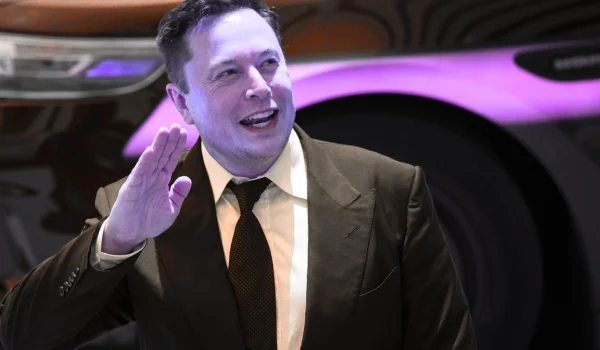
The legal dispute centers on allegations that the public description of the giveaway did not match the actual method used to select recipients.
When Musk promoted the initiative in 2024, the awards were described as going to randomly selected registered voters who signed a petition supporting the US Constitution. The petition highlighted constitutional protections, including freedom of speech and the right to bear arms.
However, the selection process later became a subject of legal scrutiny. During separate proceedings in Philadelphia, Musk’s side indicated that recipients were not chosen randomly but were selected to serve as spokespeople for the petition.
That distinction became central to the allegations against Musk and America PAC. The plaintiffs claimed that participants were led to believe they had a chance to win through random selection, while the actual process involved different criteria.
The lawsuits were filed in Texas and sought legal remedies for the alleged misleading representations. Musk and America PAC disputed the allegations.
The settlement does not, by itself, establish that the plaintiffs’ claims were proven in court. Its legal effect will depend on the terms of the agreements and the relevant court proceedings.
How Did the $1 Million Giveaway Work?
Musk announced the giveaway on October 19, 2024, through America PAC, a political action committee established to support Donald Trump’s presidential campaign.
The initiative targeted registered voters in competitive states, including Arizona, Georgia, Nevada, Michigan, and Wisconsin. Other battleground states were also part of the broader campaign.
The promotion was linked to a petition supporting constitutional rights. Participants were encouraged to sign the petition, and Musk publicly announced large cash awards as part of the initiative.
The campaign drew widespread attention for three main reasons:
- The size of the rewards: A $1 million payment was an unusually large incentive in a political outreach campaign.
- The election timing: The promotion took place in the final weeks before the November 2024 presidential election.
- The selection process: Questions arose about whether the recipients were selected according to the random-drawing method described publicly.
These issues helped transform the promotion from a high-profile political campaign into a legal controversy.
The Legal History Behind the Musk Lawsuits
The Texas lawsuits were not the first legal challenge to Musk’s election giveaway. The promotion also faced scrutiny in Pennsylvania before Election Day in 2024.
Philadelphia District Attorney Larry Krasner filed a lawsuit seeking to stop the initiative, arguing that it violated Pennsylvania’s laws governing lotteries. The dispute raised questions about whether the promotion met the legal definition of an unlawful lottery under state law.
The case moved through the courts in the days leading up to the election. A federal judge returned the Pennsylvania dispute to state court, and a judge subsequently allowed the giveaway to continue.
The Pennsylvania proceedings and the Texas class-action cases addressed different legal issues. The former focused on the legality of the promotion under state lottery law, while the latter concerned allegations that voters had been misled about how recipients were chosen.
This distinction matters because a ruling on whether a promotion qualifies as an illegal lottery does not automatically resolve separate allegations of misleading statements or potential violations of other laws.
The broader controversy also prompted questions about the relationship between financial incentives and election-related activities. The legality of any particular arrangement depends on the relevant statutes and the specific facts.
Musk Was Ordered to Testify Before the Settlement
Another important development occurred in June 2026, when a federal judge ordered Musk to testify under oath in connection with the Texas lawsuits.
The order meant that Musk could have been required to answer questions about the giveaway and the process used to select recipients.
However, according to ABC7 Amarillo’s report, Musk did not testify before the parties reached their settlement agreements.
The reported agreement could allow the parties to avoid further litigation over the claims covered by the settlement. Nevertheless, it should not be described as a court finding that Musk was guilty of fraud, nor does the available reporting establish that the settlement was an admission of wrongdoing.
The court’s handling of the agreements will determine the next procedural steps in the cases.
What Does the Settlement Mean for Voters?
The settlement announcement leaves several important questions unanswered.
Will participants receive compensation?
The publicly reported information does not specify whether participants will receive financial compensation or other remedies. The settlement terms would need to clarify any such arrangements.
Has Musk admitted that the giveaway was misleading?
The reported agreement does not establish an admission of wrongdoing. The allegations were disputed, and a settlement is not equivalent to a judgment after trial.
Are all lawsuits connected to the giveaway resolved?
The announcement concerns two lawsuits filed in federal court in Texas. It should not automatically be interpreted as resolving every separate dispute or legal question connected to Musk’s political activities.
What happens next?
The next developments depend on the formal settlement process and any subsequent court filings. Additional information may clarify the scope of the agreements and their practical consequences.
Until those details become available, claims about the exact settlement amount or payments to individual participants would be speculative.
Musk’s Political Spending Returns to the Spotlight Ahead of the 2026 Midterms
The settlement comes as Musk’s political spending has again attracted attention ahead of the November 2026 midterm elections.
According to a separate October 12, 2026, report by The National News Desk, Musk contributed $276 million to Republican super PACs over the preceding three months. The report, citing an America PAC spokesperson, placed his total political contributions for the cycle at $366 million.
The donations reportedly included significant contributions to organizations supporting Republican Senate and House candidates.
Musk’s political involvement has evolved since the 2024 presidential campaign, when America PAC supported Trump’s election effort. His financial contributions and public political advocacy have continued to make him a prominent figure in US electoral politics.
Although the latest donations are separate from the election giveaway lawsuits, the timing highlights the continuing importance of Musk’s political activities and the scrutiny that can accompany large-scale political spending.
The settlement itself does not determine whether his broader political spending complies with election law. Those questions must be assessed independently under the applicable rules and facts.
Could the Giveaway Have Violated Election Laws?
The controversy raises several legal questions, but they should not be confused with one another.
Federal law generally prohibits paying or offering to pay individuals to vote or register to vote. State laws may also regulate lotteries, sweepstakes, and misleading promotional practices.
Whether a particular political giveaway violates these rules depends on how the program was structured, what participants were told, and which laws apply.
In Musk’s case, the Pennsylvania challenge examined whether the giveaway constituted an unlawful lottery under state law. The Texas lawsuits focused on the alleged discrepancy between the advertised selection process and the process reportedly used to choose recipients.
The existence of these legal questions does not automatically establish that a violation occurred. The settlement announcement should therefore be understood as a development in civil litigation rather than a finding of criminal conduct.
Conclusion
Elon Musk’s agreement to settle two lawsuits over his $1 million election giveaway marks a new chapter in a controversy that began shortly before the 2024 US presidential election.
The lawsuits alleged that voters were misled about how recipients would be selected after Musk promoted cash awards linked to a petition supporting constitutional rights. The dispute also followed a separate Pennsylvania court challenge and a federal judge’s order requiring Musk to testify in the Texas cases.
According to the latest reporting, Musk did not testify before the settlement agreements were reached. The reported terms remain undisclosed, leaving questions about compensation and the precise legal consequences unanswered.
The case illustrates the legal scrutiny that can arise when political campaigns combine financial incentives, voter outreach, and public promises about how rewards will be distributed. The final implications will depend on the settlement documents and subsequent court action.