The Trump administration Coca-Cola lawsuit refers to a federal discrimination case brought by the U.S. Equal Employment Opportunity Commission (EEOC) against Coca-Cola Beverages Northeast, Inc.
The case involves a workplace networking event that was open to approximately 250 female employees but excluded male employees.
The EEOC filed the lawsuit in February 2026, making it one of the first major cases brought by the agency during President Donald Trump’s second administration involving a workplace diversity, equity and inclusion issue.
However, there is an important distinction: The Coca-Cola Company itself is not the defendant in this case. The defendant is Coca-Cola Beverages Northeast, a bottler and distributor of Coca-Cola products. The company is owned by Japan-based Kirin Holdings.
The lawsuit is being closely watched because it tests the Trump administration’s position that certain workplace diversity programs can amount to unlawful discrimination.
Trump Administration Coca-Cola Lawsuit: Quick Facts
| Detail | Information |
| Plaintiff | U.S. Equal Employment Opportunity Commission |
| Defendant | Coca-Cola Beverages Northeast, Inc. |
| Court | U.S. District Court for the District of New Hampshire |
| Case number | 1:26-cv-00115 |
| Filed | February 17, 2026 |
| Main issue | Alleged sex discrimination |
| Event involved | Female-only employee networking event |
| Employees involved | Approximately 250 women |
| Coca-Cola Company defendant? | No |
| Case status | Ongoing |
| Class action? | No |
| Consumer lawsuit? | No |
What Is the Trump Administration Coca-Cola Lawsuit About?
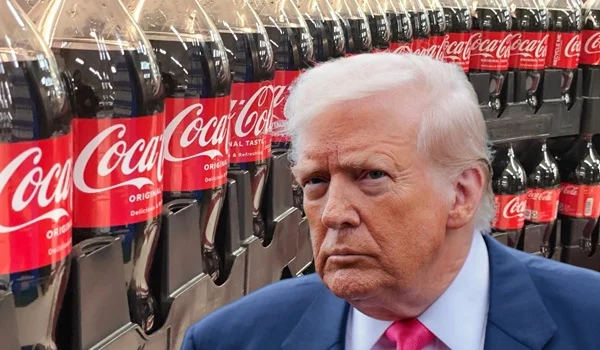
The lawsuit concerns an employee networking and development event organized by Coca-Cola Beverages Northeast.
According to the EEOC’s complaint, the company hosted a two-day event in Connecticut in September 2024 for approximately 250 female employees.
The event reportedly included activities such as:
- A social reception
- Team-building activities
- Recreational activities
- Speakers
- Networking opportunities
The EEOC alleges that male employees were excluded from participating because of their sex.
The agency argues that this violated federal employment discrimination law.
The important point is that the event happened in 2024, before Trump returned to the White House.
The lawsuit itself, however, was filed in February 2026, during Trump’s second administration.
That timing is one reason the case has been described as a Trump administration Coca-Cola lawsuit.
Who Filed the Coca-Cola Lawsuit?
The lawsuit was filed by the U.S. Equal Employment Opportunity Commission, commonly known as the EEOC.
The EEOC is the federal agency responsible for enforcing major federal laws prohibiting employment discrimination.
The agency can investigate workplace discrimination complaints and, in appropriate circumstances, file lawsuits against employers.
The Coca-Cola case is significant because it reflects the EEOC’s approach to workplace diversity programs under the Trump administration.
Who Is Being Sued?
The defendant is Coca-Cola Beverages Northeast, Inc.
This is an important distinction for anyone searching for information about a Coca-Cola lawsuit.
The defendant is not simply “Coca-Cola.”
Coca-Cola Beverages Northeast is a bottler and distributor of Coca-Cola products.
According to reporting on the case, it is owned by Kirin Holdings, a Japanese beverage company. The Coca-Cola Company itself was not named as a defendant.
Therefore, it would be inaccurate to write that:
“The Trump administration sued Coca-Cola.”
A more accurate description is:
The EEOC, under the Trump administration, sued Coca-Cola Beverages Northeast over an alleged sex-discriminatory workplace event.
What Happened at the Women’s Employee Event?
According to the EEOC’s allegations, Coca-Cola Beverages Northeast organized an employee networking event in Connecticut in September 2024.
Approximately 250 female employees were invited.
The event reportedly included professional and social activities designed to bring employees together.
The EEOC’s complaint alleges that male employees were excluded from the event.
The agency considers the exclusion potentially unlawful because employment opportunities and workplace benefits cannot generally be denied because of an employee’s sex.
The legal question is therefore not simply whether the company organized a women’s networking event.
The question is whether excluding male employees from the particular event violated federal employment discrimination law.
Why Is the EEOC Challenging a Women’s Event?
Workplace organizations sometimes create programs designed to support employees from groups that have historically been underrepresented.
These programs can include:
- Mentoring
- Networking
- Leadership development
- Professional conferences
- Employee resource groups
- Career development programs
The legal issue becomes more complicated when participation is limited based on characteristics such as sex or race.
The Trump administration’s EEOC has taken a more aggressive position toward some workplace DEI initiatives.
The agency has argued that an employer cannot use diversity goals as a reason to discriminate against employees who are not part of the targeted group.
The Coca-Cola Beverages Northeast case provides an early test of that position.
How Is This Connected to Trump’s DEI Policy?
President Trump has made eliminating what his administration considers unlawful DEI practices a major policy priority.
The administration has argued that workplace programs should not unlawfully favor or exclude employees based on protected characteristics.
EEOC Chair Andrea Lucas has also emphasized enforcement against what the agency describes as unlawful “reverse discrimination.”
The Coca-Cola case therefore fits into the broader Trump administration effort to challenge workplace programs that it believes cross the line from lawful diversity initiatives into unlawful discrimination.
The lawsuit has been described as the EEOC’s first lawsuit over a workplace DEI-related program during Trump’s second term.
Was the Coca-Cola Event a DEI Program?
The lawsuit is connected to the broader DEI debate, but it is important not to overstate the facts.
The EEOC alleges that the event excluded men.
Whether the event legally qualifies as an unlawful DEI program is ultimately a matter for the court.
The government has framed the case as a sex-discrimination matter.
Therefore, readers should distinguish between:
What the EEOC alleges
and
What a court has ultimately determined.
The lawsuit itself does not prove that Coca-Cola Beverages Northeast violated federal law.
The allegations must be resolved through the legal process.
What Law Is Involved?
The case centers on federal employment discrimination law, including Title VII of the Civil Rights Act of 1964.
Title VII generally prohibits employers from discriminating against employees or applicants because of protected characteristics, including sex.
The EEOC is responsible for enforcing Title VII.
The government’s argument is that excluding male employees from a workplace event can constitute sex discrimination when the event provides employment-related benefits or opportunities.
The company can challenge the government’s interpretation and argue that the event did not violate federal law.
The court will ultimately determine the legal issues presented by the case.
Did Coca-Cola Discriminate Against Men?
That has not been finally established by a court.
The EEOC alleges that Coca-Cola Beverages Northeast discriminated against male employees by excluding them from the event.
That is an allegation contained in the government’s lawsuit.
The company has the opportunity to defend itself in court.
Therefore, an accurate article should avoid stating as a fact that Coca-Cola “discriminated against men.”
A safer and legally accurate wording is:
“The EEOC alleges that Coca-Cola Beverages Northeast discriminated against male employees by excluding them from the event.”
When Was the Lawsuit Filed?
The EEOC filed the lawsuit on February 17, 2026, in the U.S. District Court for the District of New Hampshire.
The case is listed as U.S. Equal Employment Opportunity Commission v. Coca-Cola Beverages Northeast, Inc., 1:26-cv-00115.
The lawsuit remains ongoing.
What Is the Current Status of the Coca-Cola Lawsuit?
The case is still active.
According to the federal case record, Coca-Cola Beverages Northeast filed a motion to dismiss.
The court had not yet scheduled a pretrial conference while the motion to dismiss was pending.
In an April 21, 2026 order, the court extended the deadline for issuing a scheduling order because of the pending motion.
A reply related to the motion to dismiss was filed in May 2026.
This means there has not yet been a final judgment resolving the underlying discrimination allegations.
Did Coca-Cola Settle the Lawsuit?
No settlement has been reported in the case record reviewed.
The lawsuit remains ongoing.
A pending motion to dismiss does not mean the case has been dismissed.
It also does not mean that the EEOC has won.
The court must resolve the pending legal issues before the case can proceed toward later stages.
Is This a Class Action Lawsuit?
No.
The Trump administration Coca-Cola lawsuit is not a consumer class action.
The plaintiff is the federal government through the EEOC.
It does not involve consumers claiming compensation for purchasing Coca-Cola products.
There is therefore no public class-action registration process.
Can Employees or Consumers Sign Up?
There is no general public sign-up process.
This case is not structured like a consumer class action involving thousands of people submitting claims.
The lawsuit concerns an alleged employment discrimination practice at Coca-Cola Beverages Northeast.
People who believe they have experienced separate workplace discrimination would generally need to pursue their own rights through the appropriate legal and administrative process rather than simply joining this lawsuit.
Is There a Coca-Cola Lawsuit Settlement Payout?
There is currently no reported consumer settlement or payout associated with this case.
This is important because searches for Coca-Cola lawsuits can sometimes lead people to unrelated product liability, employment or consumer cases.
The EEOC case does not create a general payment program for Coca-Cola customers.
There is also no evidence that people who purchased Coca-Cola products are eligible for money from this lawsuit.
Is the Coca-Cola Company Being Sued by Trump?
No.
President Trump did not personally file this lawsuit.
The plaintiff is the U.S. Equal Employment Opportunity Commission.
The defendant is Coca-Cola Beverages Northeast, Inc.
This distinction matters because the phrase “Trump administration Coca-Cola lawsuit” could otherwise give the impression that Trump personally sued the Coca-Cola Company.
That is not what happened.
Is This Related to Trump’s Cane Sugar Coca-Cola Controversy?
No.
This lawsuit is separate from Trump’s well-known 2025 dispute with Coca-Cola over the company’s use of cane sugar versus high-fructose corn syrup.
In July 2025, Trump said he had convinced Coca-Cola to use real cane sugar in its U.S. Coke.
Coca-Cola initially responded by thanking Trump for his enthusiasm and saying that it would share more information about new products.
That issue involved Coca-Cola’s product formulation.
The 2026 EEOC lawsuit involves alleged workplace sex discrimination.
They are two completely different matters.
Trump and Coca-Cola Cane Sugar Issue vs. Lawsuit
| Issue | Trump Coca-Cola Sugar Dispute | EEOC Coca-Cola Lawsuit |
| Year | 2025 | 2026 |
| Main issue | Cane sugar in U.S. Coke | Workplace discrimination |
| Trump personally involved? | Yes, publicly | No personal lawsuit |
| Federal agency lawsuit? | No | Yes |
| Defendant | Coca-Cola product/business issue | Coca-Cola Beverages Northeast |
| Court case? | No | Yes |
| Consumer lawsuit? | No | No |
| Class action? | No | No |
Keeping these stories separate is important for SEO as well as factual accuracy.
Why Is the Lawsuit Important?
The case is important because it could help define how federal employment discrimination law applies to workplace diversity and networking programs.
Companies across the United States use programs designed to support women, minorities and other groups.
Some programs are clearly lawful.
Others can raise legal questions if participation, hiring, promotion or workplace benefits are restricted based on protected characteristics.
The EEOC’s lawsuit signals that the Trump administration intends to scrutinize programs that it believes cross that legal line.
The case could therefore be watched by employers and employment lawyers beyond Coca-Cola Beverages Northeast.
What Could Happen Next?
Several outcomes are possible.
The court could:
- Grant the company’s motion to dismiss.
- Deny the motion and allow the case to proceed.
- Allow some claims to continue while dismissing others.
- The parties could reach a settlement.
- The case could eventually proceed to trial.
At the current stage, it would be premature to predict which outcome will occur.
The pending motion to dismiss is an important next step because it could determine whether the EEOC’s case proceeds further.
Trump Administration Coca-Cola Lawsuit Timeline
| Date | Event |
| September 2024 | Coca-Cola Beverages Northeast holds the employee event at issue |
| February 17, 2026 | EEOC files lawsuit in New Hampshire federal court |
| April 21, 2026 | Court addresses scheduling while motion to dismiss remains pending |
| May 2026 | Further briefing related to the motion to dismiss filed |
| Current status | Lawsuit remains ongoing |
Frequently Asked Questions
What is the Trump administration Coca-Cola lawsuit?
It is an EEOC lawsuit against Coca-Cola Beverages Northeast over an employee networking event that allegedly excluded male employees.
Did Trump sue Coca-Cola?
No. The lawsuit was filed by the EEOC, not President Trump personally.
Is Coca-Cola the defendant?
The defendant is Coca-Cola Beverages Northeast, Inc., a bottler and distributor of Coca-Cola products. The Coca-Cola Company itself is not a defendant in this case.
Why is the lawsuit connected to Trump?
The EEOC filed the case during Trump’s second administration, and the lawsuit reflects the administration’s broader enforcement approach toward workplace DEI programs.
What happened at the event?
The EEOC alleges that approximately 250 female employees were invited to a two-day event in Connecticut while male employees were excluded.
Did the event happen during Trump’s presidency?
No. The event took place in September 2024, before Trump returned to office.
Did the Trump administration create the event?
No. The event occurred before the second Trump administration.
Is this a DEI lawsuit?
It is connected to the Trump administration’s broader scrutiny of workplace DEI practices, but the legal claims specifically concern alleged sex discrimination.
Is this a class action?
No.
Can consumers join the lawsuit?
No.
Is there a Coca-Cola lawsuit payout?
There is no reported consumer payout associated with this case.
Has the case been settled?
No settlement has been reported in the current court record.
Is Coca-Cola being sued over cane sugar?
No. The cane-sugar issue involving Trump is separate from this EEOC lawsuit.
Is this a lawsuit against President Trump?
No. Trump is not the defendant.
Bottom Line
The Trump administration Coca-Cola lawsuit is an EEOC employment discrimination case against Coca-Cola Beverages Northeast, not a lawsuit personally filed by President Trump against the Coca-Cola Company.
The EEOC alleges that the company violated federal employment discrimination law by holding a two-day employee event in Connecticut that was open to approximately 250 female employees while excluding men.
The event took place in September 2024, before Trump returned to the presidency. The EEOC filed the lawsuit on February 17, 2026, during Trump’s second administration.
The case is significant because it represents an early test of the Trump administration’s aggressive approach toward workplace DEI programs and alleged “reverse discrimination.”
However, the allegations have not been finally proven in court.
The case remains ongoing, with Coca-Cola Beverages Northeast having challenged the government’s claims through a motion to dismiss.
There is currently no consumer settlement, class-action payout or public sign-up process connected to this lawsuit.
It is also completely separate from Trump’s 2025 push for Coca-Cola to use cane sugar in its U.S. Coca-Cola products. That was a product-formulation issue, not a lawsuit.
Legal Disclaimer
This article is for general informational purposes only and does not constitute legal advice. Allegations contained in a lawsuit are not findings of fact. The case remains subject to further court proceedings, and its status may change as new orders or filings are issued.