The Trump Washington DC development lawsuits involve a growing series of legal challenges over President Donald Trump’s plans to change, renovate, or redevelop major public and historic sites in Washington, D.C.
The lawsuits involve several different projects, including the proposed White House ballroom, the East Potomac Golf Links redevelopment, the planned 250-foot Independence Arch, changes at the Kennedy Center, improvements to the National Mall, and other projects associated with the Trump administration’s efforts to reshape parts of the nation’s capital.
These are not one single lawsuit. Each project involves different plaintiffs, defendants, legal claims and court proceedings.
Some of the disputes focus on historic preservation. Others involve federal environmental reviews, congressional authority, public land, administrative procedures or the president’s power to make changes to federal property.
The legal landscape has changed quickly. Most recently, on August 7, 2026, a federal appeals court blocked above-ground construction of Trump’s proposed White House ballroom, concluding that the project required congressional authorization. Trump has said he plans to appeal to the U.S. Supreme Court.
Trump Washington DC Development Lawsuits: Quick Facts
| Issue | Details |
| Main location | Washington, D.C. |
| President | Donald Trump |
| Main issues | Development, renovations, historic preservation and federal property |
| Projects involved | White House ballroom, golf course, Independence Arch, Kennedy Center and National Mall projects |
| Plaintiffs | Preservation groups, residents, golfers and other organizations |
| Defendants | Federal agencies and administration officials |
| Courts | Mainly federal courts in Washington, D.C. |
| Class action | No single class action |
| Current status | Different lawsuits are at different stages |
Is There One Trump Washington DC Development Lawsuit?
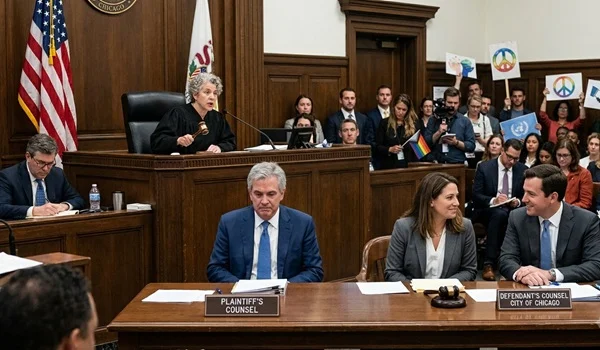
No.
The phrase “Trump Washington DC development lawsuits” describes several separate legal disputes.
This distinction is important because the legal outcome of one case does not automatically decide another.
For example, the lawsuit involving the White House ballroom concerns whether the president can make a major alteration to the White House complex without congressional authorization.
The East Potomac Golf Links case involves federal parkland, public access, environmental and historic-preservation issues.
The Independence Arch lawsuit involves a proposed 250-foot structure near the National Mall.
The Kennedy Center lawsuit involves proposed alterations to a historic cultural institution.
Although these projects are all connected to Trump’s efforts to reshape Washington, D.C., they should be treated as separate lawsuits.
Why Are Trump’s Washington DC Projects Facing Lawsuits?
Several of Trump’s proposed projects have attracted lawsuits from organizations and individuals concerned about how federal land and historic properties are being changed.
The plaintiffs’ legal arguments vary, but common issues include:
- Historic preservation
- Environmental review
- Congressional authority
- Federal land-use laws
- Administrative procedure
- Public access
- Government agency authority
- Protection of historic landscapes
The lawsuits generally do not simply argue that Trump is not allowed to improve federal property.
Instead, plaintiffs often argue that the administration must follow specific laws and approval procedures before making major changes.
That distinction is important when describing these cases.
- Trump White House Ballroom Lawsuit
The White House ballroom project has become one of the most significant development disputes in Washington.
Trump proposed a large ballroom and event facility at the White House complex. The project involved the demolition of the East Wing and construction of a much larger structure.
The National Trust for Historic Preservation challenged the project in federal court.
The organization argued that the administration could not proceed with such a major alteration to the White House complex without congressional authorization and required reviews.
A federal district court previously blocked the project.
The administration appealed.
Latest White House Ballroom Lawsuit Update
On August 7, 2026, the U.S. Court of Appeals for the D.C. Circuit ruled 2-1 to block above-ground construction of the ballroom.
The appeals court concluded that a project of this scale required congressional authorization.
The court’s decision emphasized the legal limits on presidential authority to make major changes to the White House complex without Congress.
The order is temporarily on hold for 14 days to give the administration an opportunity to seek further review. Trump has said he plans to appeal to the Supreme Court.
This is currently one of the most important Trump Washington development lawsuits.
- Trump East Potomac Golf Course Lawsuit
Another major dispute involves East Potomac Golf Links, a historic public golf course in Washington, D.C.
The Trump administration has proposed transforming the course into a championship-level golf facility.
Two local golfers and the D.C. Preservation League sued the federal government in February 2026.
The plaintiffs argue that the administration failed to properly complete required environmental and historic-preservation reviews.
They also object to the administration’s handling of the public golf course and material brought to the site from the White House East Wing demolition.
The lawsuit is separate from the White House ballroom case.
Latest Golf Course Lawsuit Update
The case remains pending.
In July 2026, U.S. District Judge Ana Reyes demanded stronger assurances from the administration that it would not move ahead with major renovations before the legal dispute was resolved. The judge’s concerns followed Trump’s public statements that significant renovation work could begin September 1.
The court has not issued a final ruling declaring the entire golf course redevelopment plan lawful or unlawful.
Therefore, it would be incorrect to say that the court has permanently stopped Trump’s East Potomac plans.
- Trump 250-Foot Independence Arch Lawsuit
Another Washington development dispute concerns Trump’s proposed 250-foot Independence Arch near Memorial Circle.
The proposed structure is intended to commemorate the 250th anniversary of American independence.
Four individuals filed a lawsuit in February 2026 seeking to stop construction of the proposed arch.
The lawsuit names Trump, federal officials and the National Park Service as defendants.
The plaintiffs seek declaratory and injunctive relief, arguing that the project violates legal restrictions governing federal land and development in Washington, D.C.
Why Is the Independence Arch Controversial?
The proposed height is one of the major issues.
Washington has historically had strict restrictions concerning building heights.
The administration has argued that federal structures may receive different treatment under federal law.
The issue has therefore created a legal dispute over how Washington’s building-height rules apply to a major federal project.
This lawsuit is separate from the White House ballroom and East Potomac Golf Links cases.
- Trump Kennedy Center Lawsuit
The John F. Kennedy Center for the Performing Arts is another major target of litigation.
A coalition of architectural, cultural and historic-preservation organizations filed a federal lawsuit in March 2026.
The organizations are challenging the Trump administration’s plans for significant changes to the Kennedy Center.
The plaintiffs argue that the administration must comply with federal historic-preservation requirements and obtain appropriate congressional and federal approvals before carrying out major alterations.
The lawsuit is especially significant because the Kennedy Center is a major national cultural landmark.
Trump has discussed extensive renovation plans, including potentially taking portions of the building down to its structural framework.
The plaintiffs argue that major changes should not occur without the legally required review process.
This case should remain separate from the White House construction lawsuit because the property, plaintiffs and legal issues are different.
- Trump National Mall Development Lawsuits
Several Trump administration projects have also generated legal opposition involving the National Mall and surrounding federal parkland.
One example involves the proposed National Garden of American Heroes.
A group of preservation and cultural organizations filed a federal lawsuit in June 2026 challenging the proposed garden.
The plaintiffs argue that the project conflicts with federal laws governing commemorative works and the use of land around the National Mall.
The dispute is significant because the National Mall is not simply ordinary federal property.
It is one of the most important historic and symbolic landscapes in the United States.
Federal laws and planning rules govern how new memorials and structures can be added to the area.
- Trump Reflecting Pool Lawsuit
The Trump administration’s changes to the Lincoln Memorial Reflecting Pool have also faced legal challenges.
The project has been described as a major renovation of the historic landscape.
The Cultural Landscape Foundation sued the Department of the Interior over the project.
The organization has raised concerns about changes to the historic landscape and the federal review process.
The project has been part of the broader pattern of lawsuits surrounding Trump’s efforts to alter prominent sites in Washington.
News reports in 2026 described the Reflecting Pool project as one of several Trump administration renovation projects that prompted legal challenges.
Why Are Historic Preservation Laws Important?
Historic preservation laws are central to many of these lawsuits.
Washington, D.C., contains some of the most historically significant federal properties in the country.
Before making major changes to certain historic properties, federal agencies may have to complete specific reviews and consultations.
Plaintiffs in several Trump-related lawsuits argue that the administration moved too quickly or failed to follow those procedures.
The administration, on the other hand, has argued that the president and federal agencies have significant authority over federal property and national-security-related projects.
The courts are being asked to determine where those powers begin and end.
Do These Lawsuits Mean Trump Cannot Develop Washington, D.C.?
No.
The lawsuits do not establish a general rule preventing Trump from renovating federal property.
Instead, each project must be evaluated under the laws that apply to that particular property.
For example, the White House ballroom case involves congressional authority and the special legal status of the White House.
The East Potomac case involves federal parkland and environmental and historic-preservation laws.
The Kennedy Center dispute involves another federally connected historic property.
Therefore, a court decision in one case does not automatically prohibit all other Trump development projects.
Are These Trump Lawsuits Class Actions?
No.
There is no single class-action lawsuit covering Trump’s Washington, D.C., development projects.
The cases have been brought by different plaintiffs, including:
- Historic preservation organizations
- Architectural organizations
- Local residents
- Golfers
- Cultural organizations
- Environmental and landscape groups
Because these are separate lawsuits, there is no general public sign-up process.
Is There a Trump Washington DC Development Lawsuit Settlement?
There is no single settlement covering these projects.
Each lawsuit has its own legal process.
Some cases could potentially be resolved through court rulings, settlements or agreements between the parties.
Others may continue through appeals.
Readers should therefore be careful with websites claiming that people can sign up for a general “Trump Washington DC lawsuit settlement.”
There is no single settlement of that kind.
Is There a Lawsuit Payout?
Generally, no.
These lawsuits are primarily about whether the administration has followed federal law and whether specific projects can proceed.
They are not typical consumer class actions involving financial compensation.
The plaintiffs are generally seeking remedies such as:
- Injunctions
- Declaratory judgments
- Court orders requiring federal review
- Stopping or delaying construction
- Requiring agencies to comply with federal law
That means there is no general public payout associated with these Washington development lawsuits.
How Are the Trump Washington DC Lawsuits Connected?
The lawsuits are connected mainly because they involve the Trump administration’s efforts to reshape prominent parts of Washington, D.C.
Several cases raise similar questions about presidential authority and federal procedures.
However, the cases remain legally separate.
A useful way to understand them is:
| Project | Main Legal Focus |
| White House ballroom | Congressional authority and historic federal property |
| East Potomac Golf Links | Public parkland, environmental and preservation review |
| Independence Arch | Federal land, building-height and development issues |
| Kennedy Center | Historic preservation and federal review |
| National Garden of American Heroes | National Mall and commemorative-work restrictions |
| Reflecting Pool | Historic landscape and federal review |
Which Trump Washington DC Lawsuits Should Be Separate Articles?
For your website’s SEO structure, I recommend keeping the individual topics separate.
You can have this article as the broad “Trump Washington DC development lawsuits” overview and then publish separate detailed articles for:
- Trump Public Golf Course Lawsuit
- Trump 250-Foot Arch Lawsuit
- Trump Kennedy Center Lawsuit
- Trump White House Construction Lawsuit
- Trump White House Ballroom Lawsuit
These should not be merged because their search intents are different.
The broad article can internally link to each specific article.
That creates a useful topic cluster instead of five articles competing for exactly the same keyword.
Trump Washington DC Development Lawsuits Timeline
| Date | Development |
| 2025 | Trump administration begins pursuing several major changes to federal properties in Washington |
| February 2026 | East Potomac Golf Links lawsuit filed |
| February 2026 | Independence Arch lawsuit filed |
| March 2026 | Kennedy Center lawsuit filed |
| June 2026 | National Garden of American Heroes lawsuit filed |
| July 2026 | Federal judge seeks stronger assurances over East Potomac golf course plans |
| August 7, 2026 | D.C. Circuit blocks above-ground White House ballroom construction |
| Current status | Multiple lawsuits remain at different stages |
Trump Washington DC Development Lawsuits FAQs
What are the Trump Washington DC development lawsuits?
They are multiple lawsuits challenging different Trump administration development and renovation projects involving federal properties and historic sites in Washington, D.C.
Is there one Trump Washington DC development lawsuit?
No. The phrase refers to multiple separate lawsuits.
What is the biggest current Trump DC development lawsuit?
The White House ballroom case is currently one of the most significant because the D.C. Circuit on August 7, 2026, blocked above-ground construction and found that congressional authorization was required.
What is the Trump public golf course lawsuit?
It concerns the proposed redevelopment of East Potomac Golf Links, a historic public golf course in Washington, D.C. The case remains pending.
What is the Trump 250-foot arch lawsuit?
It is a federal lawsuit challenging Trump’s proposed 250-foot Independence Arch near Memorial Circle in Washington, D.C.
Is Trump being sued over the Kennedy Center?
Yes. A coalition of architectural and historic-preservation organizations filed a lawsuit challenging the administration’s plans for major changes to the Kennedy Center.
Are these lawsuits class actions?
No. They are separate cases brought by different organizations and individuals.
Can people sign up for these lawsuits?
There is no general public sign-up process.
Is there a Trump DC development lawsuit settlement?
There is no single settlement covering all of these cases.
Is there a payout?
These lawsuits generally seek court orders and other legal remedies rather than consumer compensation.
Could the Supreme Court become involved?
Potentially. The White House ballroom dispute is particularly significant because Trump has said he intends to seek Supreme Court review of the D.C. Circuit decision.
Bottom Line
The Trump Washington DC development lawsuits are a collection of separate legal battles over the Trump administration’s plans to renovate, redevelop or construct major projects in the nation’s capital.
The disputes involve some of Washington’s most recognizable locations, including the White House, East Potomac Golf Links, the Kennedy Center, the National Mall and proposed new structures such as the Independence Arch.
The lawsuits are not all based on the same legal theory.
Some focus on historic preservation. Others involve environmental review, federal land-use rules, congressional authority or administrative procedures.
The most significant recent development came on August 7, 2026, when the D.C. Circuit blocked above-ground construction of Trump’s proposed White House ballroom, ruling that congressional authorization was required for the major alteration. Trump has indicated that he plans to appeal the decision to the Supreme Court.
Other lawsuits remain active.
The East Potomac Golf Links case continues to challenge the administration’s plans for the public golf course, while the Independence Arch and Kennedy Center disputes address other proposed changes to Washington’s historic landscape.
The key point for readers is that there is no single “Trump Washington DC development lawsuit.” Each project has its own lawsuit, legal claims and court status.
For SEO purposes, this broad article can serve as the main overview page, while separate articles should cover the individual lawsuits in greater detail.
Legal Disclaimer
This article is for general informational purposes only and does not constitute legal advice. Lawsuits involve disputed legal claims, and court proceedings can change. Readers should consult official court records or a qualified U.S. attorney for advice regarding a specific legal matter.